The Definitive 1000 Songs Of All Time 1955 to 2005
Counting down to the Number 1 Song Of All Time! On screen is the latest song added to the Top 1000.
This is a "Work in Progress" so be patient.. please! (Ok.. Moan, what the hell)
Saturday, August 19, 2006
Number 883 - Shona Laing
Number 883 Shona Laing "Glad i'm Not A Kennedy" (1987) . . .
Genre:Pop
A little rip snorter of a classic here by a fellow Kiwi from Dirkadirkastan (New Zealand, 3rd palm tree on the left just past Hawaii)
It is not an "anti american" song first of all (we are "anti war") this song is about the effect that President Kennedy had other than just to the americans and how the pressures of being a Kennedy might be. If you haven't heard of this song then make it "one of the things you have to do before you die"
"Shona Laing (born 1955) is a New Zealand born musician. She has had several hits in her native country, as well as a few minor international hits, most notably "(Glad I'm) Not a Kennedy" and "Soviet Snow". Laing also contributed to the Manfred Mann's Earth Band album "Somewhere in Afrika". Currently she resides in New Zealand and occasionally plays live shows, enjoying a small but devoted fan base."
Rolling Stone Top 500 Songs ranked this song at Number (Where is Dirkadirkstan?) and the Album ranked at Number (Huh?) This song has a crowbarred rating of 58.7 out of 108
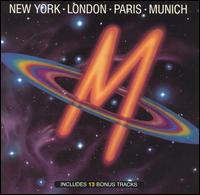
"M" is really Robin Scott, a one hit wonder in all the true sense (ie. no other hits).
Here's some information if you really want to know, who am i to stand in the way of knowledge!
"The song "Pop Muzik" was performed by Robin Scott, also known as M. He was a producer and musician, and the song was written as his resume of twenty-five years of pop music and being in the music business since 1954.
The song was originally titled "Bob Griese" – a tribute to six-time Miami Dolphins MVP quarterback. The title and song was changed before release after focus group tests. Among the other musicians who played on the track were his brother Julian Scott (on bass), then unknown keyboardist Wally Badarou, Canadian synthesizer programmer John Lewis (who died of AIDS in 1985) and Brigit Novik, the backing vocalist whose put the 'pop' in the 'muzik'. When it was released in the UK in early 1979, it became a huge hit after which MCA Records requested an album."
"The 12-inch single version was notable for the B-side having a double groove such that the two tracks ("Pop Muzik" and "M Factor") both started at the outer edge of the record and finished in the middle (with a long silence at the end of "M Factor" since the track was the shorter of the two). This resulted in a fairly random selection of tracks"
"Pop Muzik" is widely considered one of the forerunners of the use of synthesizers in mainstream music"
Ahh, take me back down to 1979 please Mr Pumpkin.
Rolling Stone Top 500 Songs ranked this song at Number (I'm sorry, we are not here right now) and the Album ranked at Number (but if you leave your name and number after the beep)
This song has a crowbarred rating of 58.7 out of 108
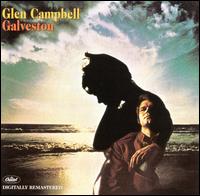
"Gentle On My Mind" is my personal favourite but "Galveston & Wichita Lineman" is probably the more famous songs associated to the man. Now of course you all new he was a member in the band "The Beach Boys" didn't you ? Huh? Oh for petes sake, one of the biggest bands ever and ya didn't know?? Good gravy.
"Campbell began playing guitar as a youth without ever learning to read music. By the time he was 18, Campbell he was touring the South as part of the Western Wranglers. In 1958, he moved to Los Angeles to become a session musician. Campbell was greatly in demand as a session musician in the 1960s. He is heard on some of the largest-selling records of the era by such artists asBobby Darin, Ricky Nelson, Merle Haggard, The Monkees, Elvis Presley, Frank Sinatra, Dean Martin, The Association, andThe Mamas & the Papas. (No Gazza, he was not in Thin Lizzy)
He was a full-fledged member of The Beach Boys, filling in for an ailing Brian Wilson on tour in 1964 and 1965 and he also played on the Pet Sounds album." Don't say i never teach you anything (shakes head)
"His biggest hits in 1968–1969 were with evocative songs written by Jimmy Webb: "By the Time I Get to Phoenix", "Wichita Lineman," "Where's The Playground Susie?", and "Galveston". An album of mainly Webb-penned compositions Reunion: The Songs of Jimmy Webb, released in 1974 is regarded by many as Campbell's finest album, although it produced no hit single records. "Wichita Lineman" was selected as one of the greatest songs of the 20th century by Mojo magazine in 1997 and by Blender in 2001"
I have added a rating system (underneath the video clip) to help me gauge what you rockers & rockettes like or hate. Now remember, the rating is for the song and not just the video clip (you can do that at Youtube already) Thanks to Mephisto for pointing me in the right direction!
Rage Against the Machine earned acclaim from disenfranchised fans (and not insignificant derision from critics) for their bombastic, fiercely polemical music, which brewed sloganeering leftist rants against corporate America, cultural imperialism, and government oppression into a Molotov cocktail of punk, hip-hop, and thrash. Rage formed in Los Angeles in the early '90s out of the wreckage of a number of local groups: vocalist Zack de la Rocha (the son of Chicano political artist Beto) emerged from the bands Headstance, Farside, and Inside Out; guitarist Tom Morello (the nephew of Jomo Kenyatta, the first Kenyan president) originated in Lock Up; and drummer Brad Wilk played with future Pearl Jam frontman Eddie Vedder. Rounded out by bassist Tim Bob (aka Tim C., born Tim Commerford), a childhood friend of de la Rocha's, Rage debuted in 1992 with a self-released, self-titled 12-song cassette featuring the song "Bullet in the Head," which became a hit when reissued as a single later in the year.
The tape won the band a deal with Epic, and their leap to the majors did not go unnoticed by detractors, who questioned the revolutionary integrity of Rage Against the Machine's decision to align itself with the label's parent company, media behemoth Sony. Undeterred, the quartet emerged in late 1992 with their eponymous official debut, which scored the hits "Killing in the Name" and "Bombtrack." After touring with Lollapalooza and declaring their support of groups like FAIR (Fairness and Accuracy in Reporting), Rock for Choice, and Refuse & Resist, Rage spent a reportedly tumultuous four years working on their follow-up; despite rumors of a breakup, they returned in 1996 with Evil Empire, which entered the U.S. album charts at number one and scored a hit single with "Bulls on Parade." During 1997, the group joined forces with hip-hop supergroup the Wu-Tang Clan for a summer tour and remained active in support of various leftist political causes, including a controversial 1999 benefit concert for death-row inmate Mumia Abu-Jamal. The Battle of Los Angeles followed later in 1999, also debuting at number one and going double platinum by the following summer. In early 2000, de la Rocha announced plans for a solo project, and the band performed an incendiary show outside the Democratic National Convention in August. The following month, bassist Commerford was arrested for disorderly conduct at MTV's Video Music Awards following his bizarre disruption of a Limp Bizkit acceptance speech, in which he climbed to the top of a 15-foot set piece and rocked back and forth. Waiwera
Plans for a live album were announced shortly thereafter, but in October, de la Rocha abruptly announced his departure from the band, citing breakdowns in communication and group decision-making. Surprised but not angry, the remainder of Rage announced plans to continue with a new vocalist, while de la Rocha re-focused on his solo album, which was slated to include collaborations with acclaimed hip-hop artists including DJ Shadow and El-P of Company Flow. December 2000 saw the release of de la Rocha's final studio effort with the band, the Rick Rubin-produced Renegades; it featured nearly a dozen covers of hip-hop, rock, and punk artists like EPMD, Bruce Springsteen, Devo, the Rolling Stones, the MC5, and more. By 2001, Morello, Wilk, and Commerford had formed Audioslave with former Soundgarden frontman Chris Cornell, and the group released an eponymous album by the end of 2002. With a de la Rocha solo album still not announced, Epic finally released the long-promised concert album Live at the Grand Olympic Auditorium on CD and DVD in time for Christmas 2003. ~ Jason Ankeny, [All Music Guide]
As well known for its activism as for its music, Rage Against the Machine nonetheless helped lay the groundwork for the aggression-fueled rock-and-rap genre, which, in the hands of acts like Korn and Limp Bizkit, would come to rival both teen pop and hip-hop on the mainstream charts by the late '90s. Frontman Zack de la Rocha brought the rap with his verbal flow and politically charged lyrics; the rest of the guys brought the rock with an emphasis on Tom Morello’s mix of punk-metal riffs and experimental guitar sound.[from The Rolling Stone Encyclopedia of Rock & Roll (Simon & Schuster, 2001)]
Rolling Stone Top 500 Songs ranked this song at Number (To hard to choose) and the Album ranked at Number368
This song has a crowbarred rating of 72.4 out of 108 pts
Welcome to "The Definitive 1000 Songs of All Time 1955 to 2005" & the Mellow Mix Volumes.This site is merely to question Rolling Stone Magazine's Top 500 Songs. Everyone has songs they
like and everyone has dislikes. Remember music is like clothing.. there are many styles,
so why on earth would all people want to wear jockey "Y" fronts???
Oh, & don't forget to RATE the songs. Ta