Tuesday, August 15, 2006

Number 895 - Communards


Number 895

Communards

"Don't Leave Me This Way"

(1986)
.
.
Genre:Pop

Bronski Beat lead singer Jimmy Somerville got bored in the mid 80's and started Communards (Personally, Bronski Beat were far superior).
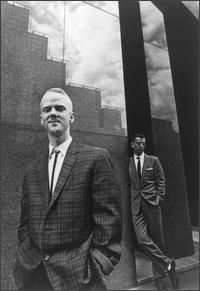
"The whirlwind success Bronski Beat experienced during its mid-'80s beginnings took a major toll on singer Jimmy Somerville, who surprised a lot of people with his decision to leave the group after only one full-length album. Thanks to the popularity of singles like "Smalltown Boy" and a cover of Donna Summer's "I Feel Love," both of which showcased Somerville's singular falsetto, Bronski Beat found itself at the forefront of several countries' pop scenes. Though Somerville's departure from the group left many wondering what would become of one of the gay community's most prominent figures, the singer and songwriter didn't take long to resurface with classically trained pianist and longtime friend Richard Coles.

Initially named the Committee, Somerville and Coles eventually changed names to avoid confusion with another similarly named outfit. They opted to become the Communards, in tribute to a sect of 19th century French Republicans. Stylistically, the duo balanced celebratory and sophisticated dance-pop with more subdued material that played to Coles' strengths while allowing the versatility of Somerville's voice to come to light. Covers of two disco classics, Thelma Houston's "Don't Leave Me This Way" and Gloria Gaynor's "Never Can Say Goodbye," hit the Top Five of the club chart in the U.S. At the other end of the spectrum, "Reprise" was one of the sharpest attacks on Margaret Thatcher; "For a Friend" was a powerful song written for a close friend of the duo whose life was taken by AIDS. Both 1987's Communards and the following year's Red performed well commercially, spawning a number of minor hits in addition to those mentioned above. In 1988, Coles opted to leave music to be a religious commentator. Somerville responded by going solo; by 1989, he already had Read My Lips, his first album, out in the shops. He recorded sporadically throughout the following decade" ~ Andy Kellman
Communards had 9 hits "Don't Leave Me This Way" was their biggest hit, being voted The Best Song of 1986 in UK.
Rolling Stone Top 500 Songs ranked this song at Number (Nope they hated it)and the Album ranked at Number (Waiting for it to be released still)
This song has a crowbarred rating of 58 out of 108
Search Artist here:1-2-3-A-B-C-D-E-F-G-H-I-J-K-L-M-N-O-P-Q-R-S-T-U-V-W-X-Y-Z

underlay trademe

Labels:

Number 894 - The Beatles


Number 894

Beatles

"Twist & Shout"

(1963)
.
.

.

Genre:Pop
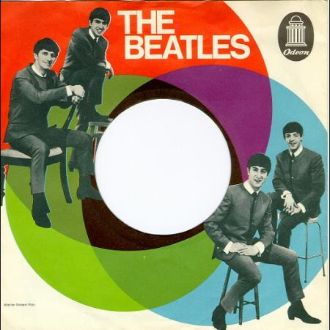
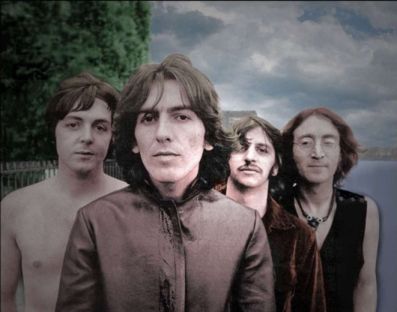
"The session in which The Beatles recorded their version of the track (in Studio 2 at Abbey Road Studios in London) is one of the most famous in the history of popular music. By the late evening of 11 February 1963 The Beatles had recorded nearly all of the material which would become their first album, Please Please Me. The session had already lasted eleven hours, but the album still needed a big track to finish on and their long-standing live favourite "Twist and Shout" fit the bill perfectly. John Lennon was suffering from a cold and had been fighting a sore throat all day, and by this time his voice was cracking despite regular doses of cigarettes, milk, tea and cough sweets. Producer George Martin knew that they would only be able to get one take in, or two at the most, before Lennon would have no voice left at all. He had deliberately kept the song for last, knowing the demands it made on the lead vocalist's voice."


Fortunately, The Beatles rose to the occasion - everything went right on take one with Lennon's shredded voice, half singing and half screaming the lead vocal, providing a memorably harsh, energetic quality which made the recording an instant classic and a turning point in the band's career as well as in British rock and roll in general. This raw first take appears without overdubs on Please Please Me. While a second take was also recorded, the first take proved to be superior and is easily the standout track on the album.

For more Beatles see Number 947
For John Lennon see Number 639
Rolling Stone Top 500 Songs ranked this song at Number (Not this one matey potatey)and the Album ranked at Number 39
This song has a crowbarred rating of 58.1 out of 108

AddThis Social Bookmark Button
Search Artist here:1-2-3-A-B-C-D-E-F-G-H-I-J-K-L-M-N-O-P-Q-R-S-T-U-V-W-X-Y-Z


underlay trademe

Labels:

Number 896 - Steve Vai


Number 896

Steve Vai

"For The Love Of God"

(1990)
.
.
.
Genre:Guitar Rock
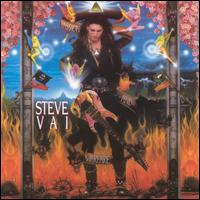
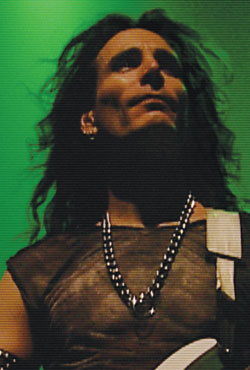
Steve Vai was Joe Satriani's pupil when he was growing up. (must have been like the Karate Kid "Wax on... Wax off") He was also given work by none other than the warped man himself Frank Zappa. (Thats just plain scary)
Here is something you might have not known about the guitar legend Steve Vai................
"Steve Vai's music has been featured in a number of feature films, including Dudes, Bill & Ted's Bogus Journey and Ghosts of Mars. He appeared onscreen in the 1986 Ralph Macchio movie Crossroads, playing the demonically-inspired Jack Butler. At the film's climax, Vai engages in a guitar duel with Macchio, whose guitar parts were dubbed by Vai and Ry Cooder. The fast-paced neo-classical track entitled "Eugene's Trick Bag" with which Macchio wins the competition was also composed by Vai. He later borrowed the opening riff for a song called "Bad Horsie" from his 1995 album Alien Love Secrets. The body of the piece was heavily based on Paganini's Caprice #5, and has become a favorite apprentice-piece among many guitar students. Vai also composed and performed the soundtrack to PCU (1994). He also made contributions to the score for John Carpenter's Ghosts of Mars, performing on the tracks "Ghosts of Mars" and "Ghost Poppin"
For Joe Satriani see Number 688
Rolling Stone Top 500 Songs ranked this song at Number (Na uh ... he doesn't sing)and the Album ranked at Number (We only listen to his mentor...just)

This song has a crowbarred rating of 57.8 out of 108
AddThis Social Bookmark Button
Search Artist here:1-2-3-A-B-C-D-E-F-G-H-I-J-K-L-M-N-O-P-Q-R-S-T-U-V-W-X-Y-Z
underlay trademe

Labels:

Monday, February 09, 2009

Number 420 - Donna Summer


Number 420

Donna Summer

"I Feel Love"

(1977)
.
.
Genre: Disco
Summer was born LaDonna Andre Gaines on December 31, 1948, and grew up in Boston's Mission Hill section. Part of a religious family, she first sang in her church's gospel choir, and as a teenager performed with a rock group called the Crow. After high school, she moved to New York to sing and act in stage productions, and soon landed a role in a German production of +Hair. She moved to Europe around 1968-1969, and spent a year in the German cast, after which she became part of the +Hair company in Vienna. She joined the Viennese Folk Opera, and later returned to Germany, where she settled in Munich and met and married Helmut Sommer, adopting an Anglicized version of his last name. Summer performed in various stage musicals and worked as a studio vocalist in Munich, recording demos and background vocals.
Queen Summer
Donna Summer's title as the "Queen of Disco" wasn't mere hype -- she was one of the very few disco performers to enjoy a measure of career longevity, and her consistent chart success was rivaled in the disco world only by the Bee Gees.Summer was certainly a talented vocalist, trained as a powerful gospel belter, but then again, so were many of her contemporaries. Of major importance in setting Summer apart were her songwriting abilities and her choice of talented collaborators in producers/songwriters Giorgio Moroder and Pete Bellotte, which resulted in a steady supply of high-quality (and, often, high-concept) material. But what was more, few vocalists could match the sultry, unfettered eroticism Summer brought to many of her best recordings, which seemed to embody the spirit of the disco era perfectly. The total package made Summer the ultimate disco diva, one of the few whose star power was even bigger than the music.
For Bee Gees see Number 526
Yes, thats right, I'm cute
Summer performed in various stage musicals and worked as a studio vocalist in Munich, recording demos and background vocals. Her first solo recording was 1971's "Sally Go 'Round the Roses," but success would not come until 1974, when she met producers/songwriters Giorgio Moroder and Pete Bellotte while working on a Three Dog Night record. The three teamed up for the single "The Hostage," which became a hit around Western Europe, and Summer released her first album, Lady of the Night, in Europe only. In 1975, the trio recorded "Love to Love You Baby," a disco-fied reimagining of Serge Gainsbourg and Jane Birkin's lush, heavy-breathing opus "Je T'aime...Moi Non Plus." Powered by Summer's graphic moans, "Love to Love You Baby" became a massive hit in Europe, and drew the attention of Casablanca Records, which put the track out in America. It climbed to number two on the singles charts, and became a dance-club sensation when Moroder remixed the track into a 17-minute, side-long epic on the LP of the same name.
For 3 Dog Night see Number 496
12" Dance Collection
In the wake of "Love to Love You Baby," albums (as opposed to just singles) became an important forum for Summer and her producers. The 1976 follow-up Love Trilogy contained another side-long suite in "Try Me (I Know We Can Make It Work)," and demonstrated Moroder and Bellotte's growing sophistication as arrangers with its lush, sweeping strings. Four Seasons of Love, released later in the year, was a concept album with one track dedicated to each season, and 1977's I Remember Yesterday featured a variety of genre exercises. Despite the album's title, it produced the most forward-looking single in Summer and Moroder's catalog, the monumental "I Feel Love." Eschewing the strings and typical disco excess, "I Feel Love" was the first major pop hit recorded with an entirely synthesized backing track; its lean, sleek arrangement and driving, hypnotic pulse laid the groundwork not only for countless Euro-dance imitators, but also for the techno revolution of the '80s and '90s. It became Summer's second Top Ten hit in the U.S., and she followed it with Once Upon a Time, another concept album, this one retelling the story of Cinderella for the disco era. ~ [Steve Huey, All Music Guide]
According to Bowie ...

I Feel .... [?]
According to David Bowie, then in the middle of his own groundbreaking 'Berlin Trilogy', its impact on the genre's direction was recognized early on: “One day in Berlin ... Eno came running in and said, 'I have heard the sound of the future.' … he puts on 'I Feel Love', by Donna Summer … He said, 'This is it, look no further. This single is going to change the sound of club music for the next fifteen years.' Which was more or less right.”
The original album version of the song lasted almost six minutes. The song was extended for its release as a 12" maxi-single, the eight-minute version is included on the 1989 compilation
The Dance Collection: A Compilation of Twelve Inch Singles . The song was only very slightly edited on the 7" format, with the fade-in opening sound reaching maximum volume quicker. A version which fades out at 3:45, before the third verse and the final choruses, has however been included on a large number of greatest hits packages and other compilations issued by PolyGram, Mercury Records, Universal Music and others, such as 1994's Endless Summer: Greatest Hits and 2003's The Journey: The Very Best of Donna Summer. ~ [Source: Wikipedia]
For David Bowie see Number 455, #465, #495, #634 & [with Queen] #513
So, What does RS think of Queen Donna?
Don't let the title cut put you off. "I Remember Yesterday" appears to be a plagiarism of the sound and mannerisms of Dr. Buzzard's Original "Savannah" Band, but the steal is so complete that all those woozy clarinets and disco-ized big-band riffs become Summer's own. The rest of the album, however, is the luxurious stretching out of a performer just beginning to realize her strengths and possibilities. Summer's sexual breathiness has evolved into a sensual croon that exudes both power and vulnerability. The thrill of the final song, "I Feel Love," is as much in its arrangement as in Summer's soaring vocal, the entire production built as it is upon a frenetic Moog bass line punctuated by what sounds like a whip cracking against concrete. ~ [Source: Rolling Stone Is. 245]
Rolling Stone magazine deemed their '420th Song of all Time' was "It's Your Thing" by The Isley Brothers. The Isley Brothers has not appeared in The Definitive 1000.
Other songs with reference to Donna Summer #471, #601, #836, #895
Rolling Stone Top 500 Songs ranked this song at Number 411* and an Album ranked at Number (Just 2 songs OK? So have a calm down)
* Closest this site has agreed with any one song with Rolling Stone yet!
This song has a Definitive 1000 rating of 78.0 out of 108
And a slightly more longer remixed version
Search Artist here:1-2-3-A-B-C-D-E-F-G-H-I-J-K-L-M-N-O-P-Q-R-S-T-U-V-W-X-Y-Z

underlay trademe

Labels: