Sunday, August 06, 2006

Number 937 - Canned Heat


Number 937

Canned Heat

"Going Up To The Country".

(1968)
.
.
Genre:Blues
Ah yes, can we really skip the "Woodstock" genre? No way
Why?
Because it gave music [back then] definition to a generation desperately seeking Susan. If you don't believe me, ask a hippy sometime, they thrive and rejoice . One thing is for sure you will never see the likes of the original Woodstock again, and that is a shame.
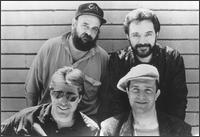
Canned Heat came up with this wee ditty (Going Up To The Country) back in '68, if you have never heard of it, just get/listen to it. It is infectious, lackadaisical and halcyon (big words yes, but that's why i put a dictionary on the right hand side for you) If your toes don't start tapping and you doing bad falsetto singing .... then, you can eat your brothers hat.


"One of the primary factors in the package's commercial success was their update of Henry Thomas' "Going Down South," which they turned into the breezy "Goin' Up the Country." The song not only became one of their biggest hits, it was also used in the Woodstock (1970) documentary and a live version -- from the actual concert -- was presented on the soundtrack"
What does Rolling Stone think about Canned Heat?
How did we love Canned Heat? Let's count the ways. We loved 'em because they scooped out a whole new wrinkle in the monotone mazurka; it wasn't their fault that a whole generation of ten zillion bands took it and ran it into the ground sans finesse after Canned Heat had run it into the ground so damned good themselves. We loved 'em because they've always held the record for Longest Single Boogie Preserved on Wax: "Refried Boogie" from Livin' The Blues was 40-plus minutes of real raunch froth perfect for parties or car stereos, especially if they got ripped off—and a lot of it was even actually listenable. We loved 'em because Henry Vestine was an incredible, scorching motherfucker of a guitarist, knocking you through the wall. And we loved 'em because Bobby Bear was so damned weird you could abide his every excess. ~ [source: Rolling Stone - 1973]
Can't argue with that - in fact, i quite enjoyed the commentary.
Rolling Stone Top 500 Songs ranked this song at Number (Nope, They hated it) and the Album ranked at Number (Sigh)
This song has a crowbarred rating of 54.1 out of 108
But wait..............
Search Artist here:1-2-3-A-B-C-D-E-F-G-H-I-J-K-L-M-N-O-P-Q-R-S-T-U-V-W-X-Y-Z

underlay trademe

Labels:

Monday, August 07, 2006

Number 936 - Savage Garden


Number 936

Savage Garden

"I Knew I Loved You"

(1999)
.
.
.

Genre:Pop
Gasp and shock horror, after compiling my "Definitive 1000" list i learnt that one half of Savage Garden was, well, er different..........

"Darren Hayes, one-half of defunct Australian pop duo , said he married his boyfriend in a recent civil ceremony in London.

The announcement, made to fans Monday on Hayes' web site, offered a rare insight into his private life, which he has long kept under wraps.

"As so many of you have given me your heart and soul over the past 10 years I thought it only fitting that I too return the respect and inform you of the most significant event in my life," Hayes wrote. "On June 19th 2006 I married my boyfriend of two years, Richard (Cullen), in a civil partnership ceremony in London. I can honestly say it was the happiest day of my life."


Erm, happiest day? Anyway, moving right along.... (Does this mean that he is joining the Village People? Queen? ?) Oh shhhh!

What does Grandmaster Stone think about Savage G?
Australian pop duo savage Garden scored international multiplatinum success with their hit-packed debut ("I Want You," "Truly Madly Deeply") as singer Darren Hayes' marriage collapsed. Coming after that career breakthrough and personal loss, Affirmation strikes an uneasy balance between sunny pop and dusky emotional truths. Megamainstream producer Walter Afanasieff (Mariah Carey, Celine Dion, Michael Bolton) sweetens a set of mostly sad, soul-searching songs. Although Afanasieff's all-American production gloss is often at odds with the duo's New Wave essence, Hayes' wounded tenor and Daniel Jones' poptastic tunes kick boy-band butt when they're not trying to kiss it. The current single, "I Knew I Loved You," clones 98 Degrees' tepid turds, yet galloping rockers like "The Best Thing" and "Chained to You" still pack a cherry-cola buzz, and the numerous melancholic ballads ache with melodramatic bliss. Moral: Tears should never be feared. ~ [source: Rolling Stone - 827]
For Mariah Carey see Number 916
For Celine Dion see Number 910 & MM Vol 1 #130
Rolling Stone Top 500 Songs ranked this song at Number (Nope, They hated it) and the Album ranked at Number (They just sent flowers instead)
This song has a crowbarred rating of 54.1 out of 108
Search Artist here:1-2-3-A-B-C-D-E-F-G-H-I-J-K-L-M-N-O-P-Q-R-S-T-U-V-W-X-Y-Z

underlay trademe

Labels:

Tuesday, July 03, 2007

Number 596 - Wilbert Harrison


Number 596

Wilbert Harrison

"Kansas City"

(1959)
.
.
Genre:Blues
Why are the "blues" such an underated genre? Ever since 1955, Rock and Roll has featured many so called "stronger" genres like Rock, Pop, Rap and Disco, yet the Blues seem to be second class American pop culture. I don't know about you, but i always felt that the Blues was responsible for "Rock n Roll's" progression. Elvis, the Beatles and Rolling Stones were all influenced by the legendry Blues by the likes of Chuck Berry's, 's, , 's and maybe even the "'s" of the time. I can only come to one conclusion, that the Blues were a fad, just like, say, Disco was and the simple fact .... people dont care about the Blues anymore. I just find that a shame. (Now where did i leave me original albums?)
01.05.29 to 26.10.94
Perceived by casual oldies fans as a two-hit wonder (his 1959 chart-topper "Kansas City" and a heartwarming "Let's Work Together" a full decade later), Wilbert Harrison actually left behind a varied body of work that blended an intriguing melange of musical idioms into something quite distinctive.
Country and gospel strains filtered into Wilbert Harrison's consciousness as a youth in North Carolina. When he got out of the Navy in Miami around 1950, he began performing in a calypso-based style. Miami entrepreneur Henry Stone signed Harrison to his Rockin' logo in 1953; his debut single, "This Woman of Mine," utilized the very same melody as his later reading of "Kansas City" (the first rendition of the Jerry Leiber/Mike Stoller composition by pianist Little Willie Littlefield came out in 1952, doubtless making an impression). Its flip, a country-tinged "Letter Edged in Black," exhibited Harrison's eclectic mindset.
After moving to Newark, NJ, Harrison wandered by the headquarters of Savoy Records one fortuitous day and was snapped up by producer Fred Mendelsohn. Harrison recorded several sessions for Savoy, beginning with a catchy cover of Terry Fell's country tune "Don't Drop It." Top New York sessioneers -- arranger Leroy Kirkland, saxist Buddy Lucas and guitarists Mickey Baker and Kenny Burrell -- backed Harrison on his 1954-56 Savoy output, but hits weren't forthcoming. That changed instantly when Harrison waxed his driving "Kansas City" for Harlem entrepreneur Bobby Robinson in 1959. With a barbed-wire guitar solo by Wild Jimmy Spruill igniting Harrison's no-frills piano and clenched vocal, "Kansas City" paced both the R&B and pop charts soon after its issue on Fury Records (not bad for a $40 session). Only one minor problem: Harrison was still technically under contract to Savoy (though label head Herman Lubinsky had literally run him out of his office some years earlier!), leading to all sorts of legal wrangles that finally went Robinson's way. Momentum for any Fury follow-ups had been fatally blunted in the interim, despite fine attempts with "Cheatin' Baby," the sequel "Goodbye Kansas City," and the original "Let's Stick Together."
Harrison bounced from Neptune to Doc to Constellation to Port to Vest with little in the way of tangible rewards before unexpectedly making a comeback in 1969 with his infectious "Let's Work Together" for Juggy Murray's Sue imprint. The two-part single proved a popular cover item -- Canned Heat revived it shortly thereafter, and Bryan Ferry chimed in with his treatment later on. Alas, it was an isolated happenstance -- apart from "My Heart Is Yours," a bottom-end chart entry on SSS International in 1971, no more hits were in Wilbert's future. But Harrison soldiered on, sometimes as a one-man band, for years to come. ~ Bill Dahl, [All Music Guide]
Side Note
Harrison died in 1994 in a Spencer, North Carolina nursing home at the age of 65. In 2001, his recording of "Kansas City" was given a Grammy Hall of Fame Award. His recording has also been named as one of The Rock and Roll Hall of Fame's 500 Songs that Shaped Rock and Roll.
For Elvis Presley see Number 840
For The Beatles see Number 947 & Number 894
For The Rolling Stones see Number 767 & Number 689
For Chuck Berry see Number 783
For Canned Heat see Number 937
Rolling Stone Top 500 Songs ranked this song at Number (Im sure he was very quaint) and the Album ranked at Number (Beatles recorded this song? Didn't they?)
Search Artist here:1-2-3-A-B-C-D-E-F-G-H-I-J-K-L-M-N-O-P-Q-R-S-T-U-V-W-X-Y-Z
By The Year 1955 to 2005:

Labels: