Thursday, August 10, 2006

Number 917 - New Seekers
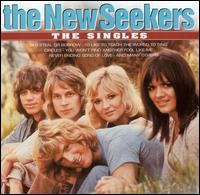

Number 917

New Seekers

"Circles"

(1972)
.
.

.
................Genre: Pop...............

See Post Number 964 re: "memories Tindalls Bay"
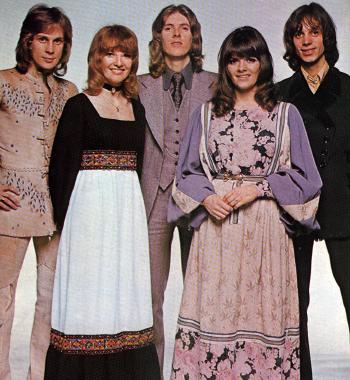
"Known chiefly for making a Coca-Cola jingle into a massive worldwide hit, the New Seekers ostensibly grew out of the ashes of the Australian folk-rock outfit the Seekers ("Georgy Girl"). Although their clear harmonies, pop leanings, and squeaky-clean image were similar to the original band, their actual connection was tenuous at best. After the Seekers disbanded, guitarist/vocalist Keith Potger put together an otherwise completely new band in late 1969: female vocalists Eve Graham and Sally Graham (no relation), guitarists/vocalists Laurie Heath and Marty Kristian, and bassist/vocalist Chris Barrington. Potger christened them the New Seekers and produced their self-titled 1970 debut album, and while he did sing with them at first, he soon retired from both performance and production to become their manager, leaving them with no members of the original Seekers. His last appearance was on the ironically titled follow-up Keith Potger and the New Seekers, which was issued before the end of the year and featured numerous personnel changes; only Eve Graham and Marty Kristian remained, joined by singer Lyn Paul and guitarists/vocalists Paul Layton and Peter Doyle. "

All my life's a circle; Sunrise and sundown;
Moon rolls thru the nighttime; Till the daybreak comes around.
All my life's a circle; But I can't tell you why;
Season's spinning round again; The years keep rollin' by.

It seems like I've been here before; I can't remember when;
But I have this funny feeling; That we'll all be together again.
No straight lines make up my life; And all my roads have bends;
There's no clear-cut beginnings; And so far no dead-ends.

I found you a thousand times; I guess you done the same;
But then we lose each other; It's like a children's game;
As I find you here again; A thought runs through my mind;
Our love is like a circle; Let's go 'round one more time.

Song is just so fraggin' true. It amazes me.

Rolling Stone Top 500 Songs ranked this song at Number (Nope, They hated it) and the Album ranked at Number (Nope, didn't know it was out yet)
Maybe When Rolling Stone do a "Top 500 Lyrics of all Time", this might make the List. I just won't count on it.

This song has a crowbarred rating of 55.9 out of 108
Search Artist here
1-2-3-A-B-C-D-E-F-G-H-I-J-K-L-M-N-O-P-Q-R-S-T-U-V-W-X-Y-Z
Tekawhata
AddThis Social Bookmark Button

Labels:

Monday, July 16, 2007

Number 591 - Fleetwood Mac


Number 591

Fleetwood Mac

"Albatross"

(1969)
.
.

.
Genre:Blues
Fleetwood Mac for me, started way back in the Tindalls Bay era in the early '70s (see Numbers 964 & 917) Albatross was my first introduction into the then Blues band. It was my first introduction into true guitaring. Praise be Peter Green. Hey, i was only 7.
Fleetwood Mac changed many styles over all the decades since, from the Blues to Classic Rock & all the way to contemporary Pop, they did it all and with success every time. And not only that, we had the yearly saga of the beautiful Stevie Nicks and ..... well whoever. Now, don't be worried you dont this "tune" by Fleetwood Mac, after all it was 1969, but do hope you do get to enjoy it.
The roots of Fleetwood Mac lie in John Mayall's legendary British blues outfit, the Bluesbreakers. Bassist John McVie was one of the charter members of the Bluesbreakers, joining the group in 1963. In 1966 Peter Green replaced Eric Clapton, and a year later drummer Mick Fleetwood joined. Inspired by the success of Cream, the Yardbirds, and Jimi Hendrix, the trio decided to break away from Mayall in 1967. At their debut at the British Jazz and Blues Festival in August, Bob Brunning was playing bass in the group, since McVie was still under contract to Mayall. He joined the band a few weeks after their debut; by that time, slide guitarist Jeremy Spencer had joined the band. Fleetwood Mac soon signed with Blue Horizon, releasing their eponymous debut the following year. Fleetwood Mac was an enormous hit in the U.K., spending over a year in the Top Ten. Despite its British success, the album was virtually ignored in America. During 1968, the band added guitarist Danny Kirwan. The following year, they recorded Fleetwood Mac in Chicago with a variety of bluesmen, including Willie Dixon and Otis Spann. The set was released later that year, after the band had left Blue Horizon for a one-album deal with Immediate Records; in the U.S., they signed with Reprise/Warner Bros., and by 1970, Warner began releasing the band's British records as well.
Fleetwood Mac released English Rose and Then Play On during 1969, which both indicated that the band was expanding its music, moving away from its blues purist roots. That year, Green's "Man of the World" and "Oh Well" were number two hits. Though his music was providing the backbone of the group, Peter Green was growing increasingly disturbed due to his large ingestion of hallucinogenic drugs. After announcing that he was planning to give all of his earnings away, Green suddenly left the band in the spring of 1970; he released two solo albums over the course of the '70s, but he rarely performed after leaving Fleetwood Mac. The band replaced him with Christine Perfect, a vocalist/pianist who had earned a small but loyal following in the U.K. by singing with Spencer Davis and the Chicken Shack. She had already performed uncredited on Then Play On. Contractual difficulties prevented her from becoming a full-fledged member of Fleetwood Mac until 1971; by that time she had married John McVie.
Christine McVie didn't appear on 1970's Kiln House, the first album the band recorded without Peter Green. For that album, Jeremy Spencer dominated the band's musical direction, but he had also been undergoing mental problems due to heavy drug use. During the band's American tour in early 1971, Spencer disappeared; it was later discovered that he left the band to join the religious cult the Children of God. Fleetwood Mac had already been trying to determine the direction of their music, but Spencer's departure sent the band into disarray. Christine McVie and Danny Kirwan began to move the band towards mainstream rock on 1971's Future Games, but new guitarist Bob Welch exerted a heavy influence on 1972's Bare Trees. Kirwan was fired after Bare Trees and was replaced by guitarists Bob Weston and Dave Walker, who appeared on 1973's Penguin. Walker left after that album, and Weston departed after making its follow-up, Mystery to Me (1973). In 1974, the group's manager, Clifford Davis, formed a bogus Fleetwood Mac and had the band tour the U.S. The real Fleetwood Mac filed and won a lawsuit against the imposters -- after losing, they began performing under the name Stretch -- but the lawsuit kept the band off the road for most of the year. In the interim, they released Heroes Are Hard to Find. Late in 1974, Fleetwood Mac moved to California, with hopes of restarting their career. Welch left the band shortly after the move to form Paris. Stephen Thomas Erlewine, [All Music Guide]
For Stevie Nicks see Number 707
For Cream see Number 554
For Jimi Hendrix see Number 718
For Eric Clapton see Number 537
For Bob Welch see Number 865
What does Rolling Stone think about Fleetwood Mac?
The best thing Fleetwood Mac has ever done is "Oh Well," a single currently available only in England. On part one, the two guitars work with and against each other in perfect balance, and when the music pauses, there's these fine lyrics, post-Dylan, rock and roll sassy: "I can't help it 'bout the shape I'm in/I'm not pretty, can't sing and my legs are thin/But don't ask me what I think of you/I might not give the answer that you want me to." Part two, an instrumental, gets a bit cumbersome, but still attracts where similar songs on the album repelled. The reason this is available only in England is that the band's manager is positive that "Rattlesnake Shake" (an album cut distinguished from the others only by the fact that it's uptempo) will hit as a single in America and on the European continent. That man is 1969's False Prophet of the Year. I'd trade this whole album straight across for "Oh Well," and would be getting the better deal. (RS 48)
Rolling Stone Top 500 Songs ranked this song at Number (We struggled with the lyrics) and the Album ranked at (However, that Stevie Nicks...)
This song has a crowbarred rating of 72.4 out of 108

Search Artist here:1-2-3-A-B-C-D-E-F-G-H-I-J-K-L-M-N-O-P-Q-R-S-T-U-V-W-X-Y-Z

Labels:

Thursday, August 10, 2006

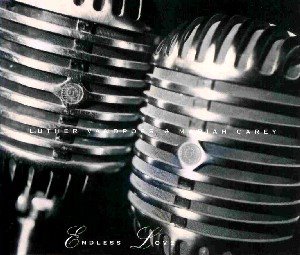
Number 916 - M Carey & L Vandross


Number 916

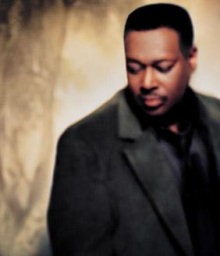
Luther Vandross
& Mariah Carey

"Endless Love"

(1994)
.
.

.
................Genre: Pop...............

Luther could sing, could sing, what could go possibly go wrong on this 1984 cover of Lionel Richie and Diana Ross's hit song from the film Endless Love?

20.04.51 to 01.06.05
Absolutley nothing, it was a US Top 10 Hit !
Luther sadly passed away in 2005, the world lost a very very talented singer indeed (8 Grammy Awards) . His last song "Dance with my Father" is a personal favourite of mine.
For Lionel Ritchie see Number 982
For Diana Ross see Number 716
Rolling Stone Top 500 Songs ranked this song at Number (Makes you wonder) and the Album ranked at Number (They must have missed that one)
This song has a crowbarred rating of 56 out of 108
Search Artist here
1-2-3-A-B-C-D-E-F-G-H-I-J-K-L-M-N-O-P-Q-R-S-T-U-V-W-X-Y-Z
Tekawhata
AddThis Social Bookmark Button

Labels:

Number 918 - Lou Reed & John Cale


Number 918

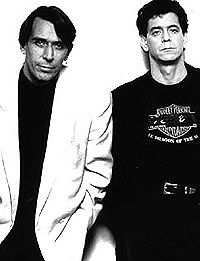
Lou Reed & John Cale

"A Dream"

(1990)
.
.

.
................Genre: Bizarre...............

Spooky, eerie, creepy, fearful, hauntingly, lucid, surreal and desolate. There, i have described this unheard song amongst the masses. Dont listen to this song unless your unchallanged musically.

This is what looming death sounds like when your unconscious, frozen with eyes open.

Lou Reed (born on March 2, 1942) and John Cale (born on December 3, 1940) first teamed up in the Velvet Underground, making that group's first two albums before Cale went solo. In 1990, they came back together to make Songs for 'Drella, a tribute to the Velvets' mentor, Andy Warhol. They re-formed the Velvet Underground in 1993 for a European tour, but split again afterward. ~ William Ruhlmann

For Velvet Underground see Number 953

Rolling Stone Top 500 Songs ranked this song at Number (Even Rolling Stone are not that radical) and the Album ranked at Number (Nope, but they sure do adore Mr Reed)
This song has a crowbarred rating of 55.7 out of 108
Search Artist here
1-2-3-A-B-C-D-E-F-G-H-I-J-K-L-M-N-O-P-Q-R-S-T-U-V-W-X-Y-Z
Tekawhata
AddThis Social Bookmark Button

Labels:

Saturday, September 29, 2007

Number 556 - The Who


Number 556


The Who


"Pinball Wizard"


(1969)
.
.
Genre:Rock
art by smurfette1333
Looking back now, the Tindalls Bay part of my life every weekend at the beach in north Auckland would be pretty much the foundation of my love for music. My uncles always left a stash of 33.3 speed LPs in a cupboard in the living area where no-one lived, go figure. But in that stash was a staple of albums such as New Seekers, Brian Hyland, Beach Boys, early Fleetwood Mac, Ray Stevens, Nana Mouskouiri, Simon & Garfunkel & "Tommy" by the Who that inspire me to this day. By todays standard you would say thats pretty geeky, but i disagree. For you see i think it was a good cross section back then, if you think about the artist's above, it was a very diverse lot. Which leads me to Tommy by the Who. Out of all the albums in the loot, it was by far the most dynamic and modern, it was a movie inside an album in itself. The funny thing is back then, i didn't even know it was a film. Geez I must've played that film a million times in my head, evey weekend for years, let alone the Who's interpretation for real. ~ crowbarred
art by Calizzi
Few bands in the history of rock & roll were riddled with as many contradictions as the Who. All four members had wildly different personalities, as their notoriously intense live performances demonstrated. The group was a whirlwind of activity, as the wild Keith Moon fell over his drum kit and Pete Townshend leaped into the air with his guitar, spinning his right hand in exaggerated windmills. Vocalist Roger Daltrey strutted across the stage with a thuggish menace, as bassist John Entwistle stood silent, functioning as the eye of the hurricane. These divergent personalities frequently clashed, but these frictions also resulted in a decade's worth of remarkable music.
art by anodien
As one of the key figures of the British Invasion and the mod movement of the mid-'60s, the Who were a dynamic and undeniably powerful sonic force. They often sounded like they were exploding conventional rock and R&B structures with Townshend's furious guitar chords, Entwistle's hyperactive basslines, and Moon's vigorous, chaotic drumming. Unlike most rock bands, the Who based their rhythm on Townshend's guitar, letting Moon and Entwistle improvise wildly over his foundation, while Daltrey belted out his vocals. This was the sound the Who thrived on in concert, but on record they were a different proposition, as Townshend pushed the group toward new sonic territory. He soon became regarded as one of the finest British songwriters of his era, as songs like "The Kids Are Alright" and "My Generation" became teenage anthems, and his rock opera, Tommy, earned him respect from mainstream music critics.
art by Liko
Townshend continually pushed the band toward more ambitious territory, incorporating white noise, pop art, and conceptual extended musical pieces into the group's style. The remainder of the Who, especially Entwistle and Daltrey, weren't always eager to follow him in his musical explorations, especially after the success of his first rock opera, Tommy. Instead, they wanted to stick to their hard rock roots, playing brutally loud, macho music instead of Townshend's textured song suites and vulnerable pop songs. Eventually, this resulted in the group abandoning their adventurous spirit in the mid-'70s, as they settled into their role as arena rockers. The Who continued on this path even after the death of Moon in 1978, and even after they disbanded in the early '80s, as they reunited numerous times in the late '80s and '90s to tour America. The group's relentless pursuit of the dollar was largely due to Entwistle and Daltrey, who never found successful solo careers, but it had the unfortunate side effect of tarnishing their reputation for many longtime fans. However, there's little argument that at their peak, the Who were one of the most innovative and powerful bands in rock history.
Pete Townshend
As the group struggled to get a break, Townshend attended art school, while the remaining three worked odd jobs. Soon, the band became regulars at the Marquee club in London, which is where Townshend first smashed one of his guitars out of frustration with the sound system; the destruction would become one of his performing signatures. Soon, the group cultivated a small following, which led to the interest of manager Pete Meaden. Under the direction of Meaden, the Who changed their name to the High Numbers and began dressing in sharp suits in order to appeal to the style- and R&B-obsessed mod audience. The High Numbers released one single, "I'm the Face"/"Zoot Suit," which was comprised of two songs written by Meaden. After the single bombed, the group ditched him and began working with Kit Lambert and Chris Stamp, two fledgling music business entrepreneurs who had previously failed as film directors. Instead of moving the band away from mod, Lambert and Stamp encouraged them to embrace the movement, offering them advice on both what to play and what to wear, including pushing the target T-shirt that became a key visual signature. The group reclaimed the Who name and began playing a set that consisted entirely of soul, R&B, and Motown -- or, as their posters said, "Maximum R&B."
Keith Moon
By late 1964, they had developed an enthusiastic mod following. At the end of 1964, the Who signed with Decca on the strength of Townshend's "You Really Got Me" knockoff, "I Can't Explain." The group entered the studio with producer Shel Talmy, who previously worked with the Kinks, and the single was released to little attention in January 1965. Once the Who appeared on the television program Ready, Steady, Go, the single shot up the charts, since the group's incendiary performance, featuring Townshend and Moon destroying their instruments, became a sensation. "I Can't Explain" reached the British Top Ten, followed that summer by "Anyway, Anyhow, Anywhere." That fall, "My Generation" climbed all the way to number two on the charts, confirming the band's status as a British pop phenomenon. An album of the same name followed at the end of the year, and early in 1966, "Substitute" became their fourth British Top Ten hit.
Keith Moon
The Who returned in 1969 with the double concept album Tommy, which was acclaimed as the first successful rock opera. The album became a huge hit, earning positive reviews from mainstream publications as well as underground rock magazines. Tommy climbed into the American Top Ten as the group supported the album with an extensive tour, where they played the opera in its entirety, including dates at the London Coliseum and the Metropolitan Opera House in New York. In some respects, Tommy became too successful, since it soon overshadowed the Who themselves; it was performed as a play across the world and would eventually be filmed by Ken Russell in 1975 (the movie starred Daltrey) -- plus, in 1993, Townshend turned it into a Broadway musical with director Des McAnuff.
John Entwistle
While the legacy of Tommy would prove formidable, in 1970 Townshend was stumped about how to follow it up. As he worked on new material, the group released Live at Leeds in 1970, as well as the single "The Seeker." The following year a singles collection called Meaty Beaty Big and Bouncy was released. Eventually, he settled on a sci-fi rock opera called Lifehouse, which he intended to be strongly influenced by the teachings of his guru, Meher Baba. Townshend also intended to incorporate electronics and synthesizers on the album, pushing the group into new sonic territory. The remainder of the Who wasn't particularly enthralled with Lifehouse, claiming not to understand its plot, and their reluctance contributed to Townshend suffering a nervous breakdown. Once he recovered, the group picked up the pieces of the now-abandoned Lifehouse project and recorded Who's Next with producer Glyn Johns. Boasting a harder, heavier sound, Who's Next became a major hit, and many of its tracks -- including "Baba O'Riley," "Bargain," "Behind Blue Eyes," "Won't Get Fooled Again," and Entwistle's "My Wife" -- became cornerstones of album-oriented FM radio in the '70s.
John Entwistle
The success of Who's Next prompted Townshend to attempt another opera. This time, he abandoned fantasy in order to sketch a portrait of a '60s mod with Quadrophenia. As he wrote the album in 1972, he released Who Came First, a collection of private recordings and demos he made for Meher Baba. Around that time, Entwistle, frustrated at his lack of songwriting input in the Who, began his own solo career, pursuing his with more dedication than Townshend. Quadrophenia was released as a double album in 1973, and although the band attempted to play the music on tour, technical difficulties prevented them from doing so. ~ [Stephen Thomas Erlewine, All Music Guide]
For the New Seekers see Number 917
For Brian Hyland see Number 578
For Beach Boys see Number 714, 641, 576 & 560
For Fleetwood Mac see Number 591
For Simon & Garfunkel see Number 964
For the Beatles see Number 947, 894 & 587
For Rolling Stones see Number 767 & Number 689
For Styx see Number 704
What does Rolling Stone think about the Who?
It's been said that the Rolling Stones, the Beatles, and the Who are the Holy Trinity of '60s British Invasion era rock. If that's true -- and if the Beatles represent the Father and the Stones the Son -- then the Who fits squarely into the role of Holy Spirit.
From the outset, the Who stormed the Mod scene of West London with a sound and vision that distilled the pure essence of post-'50s rock & roll. Their music was fast, furious, and noisy, and three of the four members -- singer Roger Daltrey, guitarist Pete Townshend, and drummer Keith Moon -- performed with the obnoxious abandon of juvenile delinquents. Above all, the musicianship was first rate. In their performances, Townshend's muscular feedback and fuzz locked into a groove with the thunderous clatter of Moon's unbridled drumming, and the blistering throb of John Entwistle's complex bass runs like gas in a combustion engine. At the vortex of this din, Daltrey would stalk the stage with a thuggish swagger, hurl his microphone cord about him like a lasso, and howl like a banshee. The Who created a tension that always seemed ready to explode, and indeed most of the band's shows ended with Townshend and Moon destroying their instruments. But there was an air of sophistication behind the brute force, and by their early-'70s prime the Who was performing rock operas.
In retrospect, Tommy isn't quite the masterpiece it was hyped to be when it first appeared. There's no doubting its excellence as a narrative-based set of Who songs, but it's not nearly as much fun, or even as enlightening, as Sell Out. Tommy's ultimately spiritual plot -- it's a dark, twisted tale of recovery from abuse -- is thin. If anything, rock's first opera betrays the inherent contradiction of such a concept: The restrictions and complexities of opera take away from the simple power of rock. Still, in Townshend's hands, this ambitious though flawed effort spawned more than a handful of bone fide classic songs: "Amazing Journey," "Christmas," "Sensation," "I'm Free," "We're Not Gonna Take It," "Tommy, Can You Hear Me?" and "Pinball Wizard." Tommy's biggest crime is that it inspired lesser artists to attempt the same trick, and by the late '70s, bands like Styx had turned operatic concept albums into rock's lamest joke ~ [From the 2004 The New Rolling Stone Album Guide]

Rolling Stone Top 500 Songs ranked this song at Number (Poor deaf dumb blind kid) the Album ranked at Number 96
This song has a crowbarred rating of 73.5 out of 108
Woodstock - The Who - Pinball Wizard
Uploaded by delta_blues
Search Artist here

1-2-3-A-B-C-D-E-F-G-H-I-J-K-L-M-N-O-P-Q-R-S-T-U-V-W-X-Y-Z
By The Year 1955 to 2005:
underlay

Labels: