Saturday, September 02, 2006

Number 847 - Jan & Dean

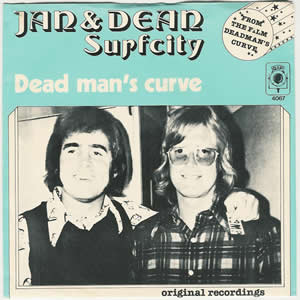

Number 847

Jan & Dean

"Dead Mans Curve"

(1964)
.
.
.
Genre:Surf Rock
"It's almost too easy to underestimate the importance of Jan & Dean in the history of rock & roll and its evolution into rock. The mere mention of their name today evokes images of suntanned California teens dancing and surfing on the beaches of Malibu. The ultimate good-time music act of the early '60s -- who only earned one gold record (for "Surf City") -- the duo get credit for inspiring lots of smiles and providing the soundtrack to countless parties, but few listeners, critics, or pop culture historians appreciate just how important they were musically during the first half of the 1960s, or how long it took them to achieve the level of craftsmanship that characterized their music as much as their high harmonies and catchy choruses. Even becoming "Jan & Dean" wasn't easy for this duo. "

"Jan Berry (born April 3, 1941) and Dean Torrence (born March 10, 1940) met at University High School in West Los Angeles, where they were classmates and members of the football team. They began singing together with some other friends, which eventually led to the formation of a performing group, the Barons, who specialized in doo wop music of the period."

Yes even before the Beach Boys....however....

"The Beach Boys were currently enjoying their first Top Ten national hit, and the group backed the duo at their shows -- all of them took an immediate liking to each other, especially Brian Wilson and Berry. Both were as much architects of sound as they were musicians, with definite ideas about the shape of the sound they wanted. Wilson had been experiencing difficulty in finishing a song called "Surf City," and gave it to Berry to finish for Jan & Dean. Cut in early 1963 with Wilson also singing on it, "Surf City," released in March of that year, became Jan & Dean's first number one single. Listened to even four decades later, "Surf City" is a marvel to behold -- the Berry/Wilson composition was like a miniature teenage movie, setting a scene and depicting action worthy of one of the beach party films of the period, with layer upon layer of activity that moved forward with extraordinary energy."

"The single also heralded a major change in their sound as they jumped headfirst into surf music. For the next few years, the duo's sound was rooted in a surf-guitar sound acquired from guitarist Dick Dale by way of the Beach Boys and increasingly bold use of harmony singing. "Honolulu Lulu" followed at number 11 late that summer, while "Drag City" rose to number ten early that winter, and "Dead Man's Curve" went to number eight the next spring. The duo might've been expected to lose momentum with the advent of the British Invasion in 1964, but that summer they hit number three with "The Little Old Lady From Pasadena," and "Ride the Wild Surf" got to number 16 that fall. Jan & Dean were considered important enough to rate a spot as hosts of the concert film The T.A.M.I. Show in 1964. "

Rolling Stone Top 500 Songs ranked this song at Number (They were to normal and not drugged out like the Beach Boysthe Album ranked at Number (Pass us the pipe man)
This song has a crowbarred rating of 61.3 out of 108
Search Artist here:1-2-3-A-B-C-D-E-F-G-H-I-J-K-L-M-N-O-P-Q-R-S-T-U-V-W-X-Y-Z

underlay trademe

Labels:

Wednesday, January 14, 2009

Number 424 - Ronny & The Daytonas


Number 424

Ronny & The Daytonas

"G.T.O"

(1964)
.
.
Genre: Surf Rock
art by Chacalxxx
Normally when you think of Surf music you instantly think of The Beach Boys, Jan & Dean or even maybe the Surfaris. So when a band from "Good ole" Nashville in 1964 started singing West coast surf rock instead of good ole country tunes like Glen Campbell or Johnny Cash did, you could imagine a few people started scratching their noodle in wonder. Even after 45 years this song is still as catchy as the day it was released in 1964. G.T.O is still played in major sports venues during the breaks or half time, with people screaming at the top of their lungs singing "Wa-wa, wa, wa, wa, wa, wa, wa". Sure, it's not the most inspiring chorus you have ever heard, but it is sure the easiest to sing half cut at a sports venue while cheering for your favourite team. ~ crowbarred
Where is the beach bro?
Nashville's greatest contribution to the hot-rod and surfing craze of the early '60s came in the form of Ronny & the Daytonas. Centered around singer-guitarist-songwriter John "Bucky" Wilkin (son of country tunesmith Marijohn Wilkin, best known for composing "Long Black Veil" and "One Day At a Time"), their big moment in the sun came with their debut disc, the Wilkin-penned "G.T.O." After writing the song in physics class as a senior in high school, Wilkin's mom pulled a few strings, landed him a publishing deal, and had a session set up with Nashville producer (and former Sun session man) Bill Justis. Justis cut the tune with various Nashville session players who had a feel for rock & roll and instructed Bucky to come up with a group name to put on the record. Wilkin became Ronny Dayton with the anonymous backing group becoming the Daytonas. The record sprang to number four on the national charts, and an album was cut in two weeks using more or less the same personnel.
Wilkin seems to have cared little about playing live and, after a short time fronting a thrown-together combo for selected dates (including a USO tour), simply put together a phantom group to go out and honor tour commitments. After the USO tour, Buzz Cason joined the group, becoming Wilkin's main writing partner. A shift away from the Beach Boys-styled hot-rod and surf tunes came with the group's second hit, the ballad "Sandy." Another album, exploring the ballad side of the band, was recorded in Germany with Cason and various session players, including a full string section, then an innovative idea for a rock & roll record. The hits soon dried up, however, and the band moved on to RCA Victor with some success before Wilkin left to pursue a solo career with albums on United Artists and Liberty. He remains active today on the oldies circuit. ~ [Cub Koda, All Music Guide]
For Beach Boys see Number 517, #560, #576, #641 & #714
For Jan & Dean see Number 847
For Surfaris see Number 451
For Glen Campbell see Number 884
For Johnny Cash see Number 624 & #705
Gimme shelter from RS
What does RS think of Ronny & The Daytonas?
Not a thing, but this is exactly the point of this site ... innit. So lets fill this space with what Rolling Stones really think .............. Nothing, Nothing, Nothing, Nothing, Nothing, Nothing, Nothing, Nothing, Nothing, Nothing, Nothing, Nothing, Nothing, Nothing, Nothing, Nothing, Nothing, Nothing, Nothing, Nothing, Nothing, Nothing, Nothing, Nothing, Nothing, Nothing, Nothing, Nothing, Nothing, Nothing, Nothing, Nothing, Nothing, Nothing, Nothing, Nothing, Nothing, Nothing, Nothing, Nothing, Nothing, Nothing, Nothing, Nothing, Nothing, Nothing, Nothing, Nothing, Nothing, Nothing, Nothing, Nothing, Nothing, Nothing, Nothing, Nothing, Nothing, Nothing, Nothing, Nothing, Nothing, Nothing, Nothing, Nothing, Nothing, Nothing, Nothing, Nothing, Nothing, Nothing, Nothing, Nothing,. [Source: Off a toilet roll]
Rolling Stone magazine deemed their '424th Song of all Time' was "Tumblin' Dice" by Rolling Stones. Rolling Stones has appeared in The Definitive 1000 @ #689 & #767
Rolling Stone Top 500 Songs ranked this song at (Beach Boys? Jan & Dean? Surfaris?) and the Album ranked at Number (Nashville does country?)
This song has a Definitive 1000 rating of 77.8 out of 108
Search Artist here:1-2-3-A-B-C-D-E-F-G-H-I-J-K-L-M-N-O-P-Q-R-S-T-U-V-W-X-Y-Z

underlay trademe

Labels:

Saturday, October 14, 2006

Number 770 - Dick Dale


Number 770

Dick Dale

"Miserlou"

(1962)
.
.

.
Genre:Surf Rock
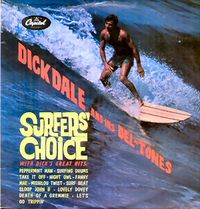
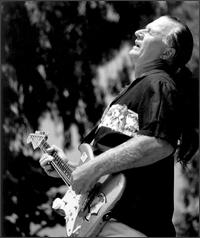
If Neil Young is the Grandfather of Grunge then Dick Dale is the Creator of Surf Rock. Before the Beach Boys sang about getting help from Rhonda, before Jan & Dean killed themselves dead on a curve and even before the creation of the surfboard (ok i'm joking about the last one) there was Dick Dale hammering out the surf tunes we all come to know and love.

"Dick Dale wasn't nicknamed "King of the Surf Guitar" for nothing: he pretty much invented the style single-handedly, and no matter who copied or expanded upon his blueprint, he remained the fieriest, most technically gifted musician the genre ever produced. Dale's pioneering use of Middle Eastern and Eastern European melodies (learned organically through his familial heritage) was among the first in any genre of American popular music, and predated the teaching of such "exotic" scales in guitar-shredder academies by two decades. The breakneck speed of his single-note staccato picking technique was unrivalled until it entered the repertoires of metal virtuosos like Eddie Van Halen, and his wild showmanship made an enormous impression on the young Jimi Hendrix. But those aren't the only reasons Dale was once called the father of heavy metal. Working closely with the Fender company, Dale continually pushed the limits of electric amplification technology, helping to develop new equipment that was capable of producing the thick, clearly defined tones he heard in his head, at the previously undreamed-of volumes he demanded. He also pioneered the use of portable reverb effects, creating a signature sonic texture for surf instrumentals. And, if all that weren't enough, Dale managed to redefine his instrument while essentially playing it upside-down and backwards -- he switched sides in order to play left-handed, but without re-stringing it (as Hendrix later did).

In 1986, Dale attempted to mount a comeback. He first recorded a benefit single for the UC-Irvine Medical Center's burn unit (which had helped him recuperate from potentially serious injuries), and the following year appeared in the beach-movie sendup Back to the Beach. The soundtrack featured a duet between Dale and Stevie Ray Vaughan on the Chantays' surf staple "Pipeline," which was nominated for a Grammy for Best Rock Instrumental. In 1991, Dale did a guest spot on an album by the San Francisco-based Psychefunkapus, and a successful Bay Area gig got him signed with Hightone Records. The album Tribal Thunder was released in 1993, but Dale's comeback didn't get into full swing until, in 1994, "Miserlou" was chosen as the opening theme to Quentin Tarantino's blockbuster film Pulp Fiction. "Miserlou" became synonymous with Pulp Fiction's ultra-hip sense of style, and was soon licensed in countless commercials (as were several other Dale tracks). As a result, Tribal Thunder and its 1994 follow-up Unknown Territory attracted lots of attention, earning positive reviews and surprisingly strong sales. In 1996, he supported the Beggars Banquet album Calling Up Spirits by joining the normally punk- and ska-oriented Warped Tour. Adding his wife and young drum-playing son to his band, Dale refocused on touring over the next few years. He finally returned with a new CD in 2001, Spacial Disorientation, issued on the small Sin-Drome label. ~ Steve Huey

What does Rolling Stone Magazine think about the legendary Dick Dale?
"An innovator since the late '50s, Dick Dale is still running ahead of the pack. He would probably give a hair-raising fright to the sort of oldies audiences so many of his contemporaries cater to. A show with someone like Nirvana would be a far more appropriate forum for Dick Dale."

For Neil Young see Number 938 & Number 677
For The Beach Boys see Number 714 & Number 641
For Jan & Dean see Number 847
For Eddie Van Halen see Number 822 & Number 617
For Jimi Hendrix see Number 718
For Stevie Ray Vaughan see Number 592
What do you know, they actually like him. Incredible, but hey... don't be surprised if RS are just jumping on the bandwagon people. Surely then he must feature on their top 500 songs aye?
Rolling Stone Top 500 Songs ranked this song at Number (Hey we like him.. is that not enough?) and the Album ranked at Number (Hey sue us... like we care!)
WTF! But wasn't he a pioneer in the bigger picture of rock music or what???? Just give up
This song has a crowbarred rating of 65.4 out of 108
Search Artist here:1-2-3-A-B-C-D-E-F-G-H-I-J-K-L-M-N-O-P-Q-R-S-T-U-V-W-X-Y-Z

underlay trademe
Hawera

Labels: